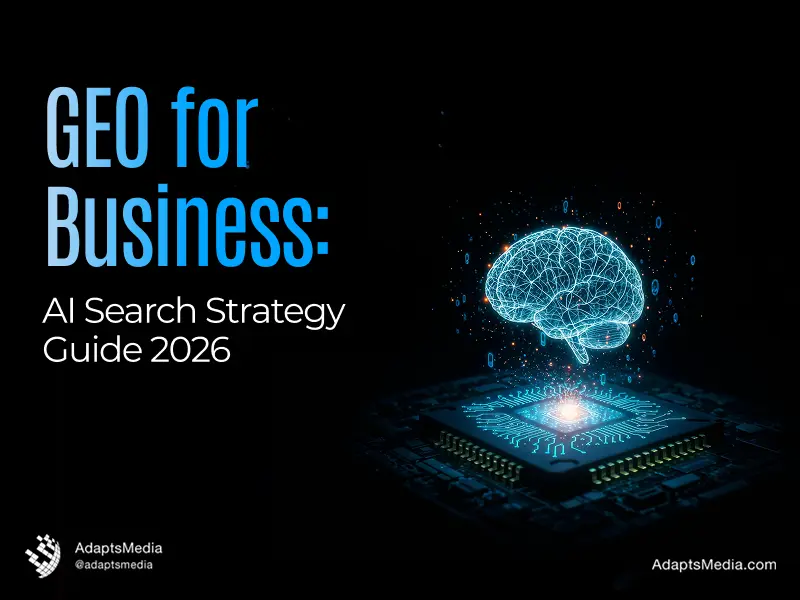
A few years back, getting your site to rank on Google brought in a steady stream of visitors. It was pretty straightforward: work your way to the top, and people would find you. But now, everything’s flipped. Folks aren’t always searching on Google anymore; instead, they’re asking ChatGPT, Gemini, Perplexity, Bing Copilot (and whatever comes next) for answers. These AI tools spit out direct responses, and most users don’t even bother clicking a website. If your content doesn’t show up in what these AI systems reference, nobody’s going to find you.
GEO is about making your content easy for AI search engines to discover, trust, and cite, so you actually appear in the answers they generate. If you’re wondering what GEO is, it’s the next evolution of search visibility in the AI era.
What is GEO?
Generative Engine Optimisation (GEO) means optimising your content so it gets referenced by AI-powered search tools like ChatGPT, Gemini, Perplexity, and Bing Copilot..Traditional SEO revolves around climbing the rankings and earning clicks; GEO is about showing up inside the answers themselves.
For businesses asking what GEO mean, it refers to the process of improving content visibility within AI-generated responses rather than only ranking on traditional search engines.
How Generative Engine Optimization Differs from Traditional SEO
For years, SEO was all about getting in the top ten of Google’s results. GEO isn’t like that. AI engines don’t just toss up a list of links—they deliver full explanations by pulling info from trusted places. Here’s a side-by-side:
| Factor | Traditional SEO | Generative Engine Optimization (GEO) |
| Main Goal | Rank in SERP Top 10 | Get cited in AI-generated answers |
| Ranking Signal | Backlinks, keywords, authority | Factual accuracy, structure, citations |
| Content Format | Keyword-heavy articles | Clear, concise, claim-based writing |
| Key KPI | Organic traffic, CTR | Citation frequency, brand mentions |
| Time to Results | 3–6 months | 4–12 weeks (AI indexes quicker) |
With AI tools, everything’s about trustworthiness and clarity. Traditional SEO rewards those who make it to the top, but AI cares about whether your info helps straightforwardly solve the user’s question.
So keywords and backlinks aren’t enough anymore. To be cited, your content has to be easy for AI to understand, backed up by good sources, and organised in a way that lets machines scan it fast.
This is a big deal for brands moving towards 2026 and beyond. People are browsing inside AI search environments more than ever. If your competitor gets referenced but you don’t, you’re losing authority and trust—sometimes long before anyone even visits a website.
Why is GEO Important for Your Business in 2026?
AI search isn’t just some fad. It’s rapidly becoming the way people make decisions, compare options, and buy stuff. If your SEO Services strategy doesn’t shift gears, you risk disappearing from view—especially as more people get their answers straight from AI responses.
This shift is exactly why Generative search engine optimisation has become a critical part of modern digital marketing strategies.
Companies like HubSpot and Shopify already publish content that’s easy for AI search engines to scan and cite. They focus on clear explanations, logical structure, and solid authority, so AI can reference them directly.
Why bother with GEO? Because it helps you:
- Show up in AI answers (not just old-school search results)
- Boost your brand’s authority and trust
- Reach users before they land on a competitor’s site
- Build awareness even when people don’t click at all
- Grow organically beyond SEO
One of our B2B tech clients revamped their educational resources using GEO tactics. Within a few months, their brand started showing up in more AI-generated answers, leading to better recognition among buyers who actually cared about their industry.
The Rise of Zero-Click and AI-Answer Searches
Search habits are changing fast. SparkToro says over 60% of Google searches end without a click. People find what they’re looking for right in the search results. AI search engines are cranking this trend up by delivering full answers right away.
That’s also made Answer Engine Optimization (AEO) more popular, which helps content show up in direct answer boxes. GEO is a step beyond that; it’s not just about being found, it’s about being cited.
As AI SEO adoption grows, Generative search engine optimization helps brands stay visible even when users never visit a search results page.
How AI Engines (Perplexity, ChatGPT, Gemini) Decide What to Cite
AI search engines are all about accuracy and trust. They scan content for credibility and look for:
- Reliable info
- Authority on the topic
- Clear structure
- Consistent facts
- Good references
- Schema markup and structured data
If you sound like an expert, and your info is organized for easy reading, you’re more likely to get cited by AI.
If you’re asking what GEO is in practical terms, it’s the process of structuring content so AI systems can easily understand, verify, and reference it.
The aim isn’t just to rank; it’s to become the brand the AI leans on for answers.
Read our guide on using ChatGPT for blog writing and the key steps needed to optimize content for search engines.
Real-World Examples of GEO
You can already see GEO’s impact across different industries.
Take one B2B SaaS company. They started adding structured data, reorganizing their articles, and making sure key points were easy for AI to cite. In just three months, their AI-generated mentions went up by 47% across several platforms.
An e-commerce brand focused on building detailed product comparison pages with specs, benefits, and buying advice. Their content wound up showing up in about 12% of Perplexity searches for their main category.
Another client used our GEO-centric approach—authority-building, content optimization, schema improvements and saw a genuine boost in AI visibility and branded searches after a few months. We only share specific performance numbers if our clients approve, but the results are real.
What’s the takeaway? GEO isn’t about tricking algorithms; it’s about making info easier for AI engines to grab and reference.
That’s why more businesses are investing in Generative search engine optimization as part of their long-term content strategy.
How to Measure Your Business GEO Performance
Like any marketing effort, you need good metrics.
Here’s what you can watch:
- How often does your brand get cited on platforms like ChatGPT, Gemini, and Perplexity
- Volume of brand mentions in AI answers
- Share of voice versus your competitors
- Zero-click impressions in Search Console
- How often do you capture featured snippets
- Growth in branded search queries
- Traffic from AI-powered search
Tools like BrightEdge AI Search and other monitoring platforms let you see how often you’re showing up in AI-generated responses.
Understanding what GEO means from a measurement perspective is important. It means tracking citations, AI mentions, share of voice, and brand visibility across AI platforms.
GEO metrics are a little different from traditional SEO KPIs, but the core goal is the same: get noticed by customers.
How Adapts Media Helps Clients Win in AI Search
AI search keeps evolving, and most businesses are just trying to keep up.
Here’s how we approach GEO at Adapts Media:
At Adapts Media, the best digital marketing company in Dubai, we help brands build content that people and AI actually trust. We tackle everything from GEO audits and content strategy to schema and authority building, utilising frameworks designed to enhance AI visibility. No quick fixes, just information that stays accurate and valuable.
Whether you’re exploring Generative Engine Optimization (GEO) for the first time or looking to scale an existing strategy, our approach is designed to improve AI visibility and long-term authority.
Our team monitors how AI platforms reference content, allowing us to adjust our tactics as the landscape evolves.
Ready to get noticed in AI-powered search? Reach out to us. Let’s talk about GEO and how it fits your long-term growth.
Frequently Asked Questions
SEO helps you rise in rankings in standard search. GEO gets your content cited in AI-generated answers. GEO puts a bigger focus on trust, structure, and credible citations than keywords alone.
For anyone wondering what GEO is, think of it as SEO adapted for AI-powered search experiences.
Timelines vary by industry and quality, but you usually see more citations in four to twelve weeks. Higher authority and consistent optimization can speed things up.
Nope. GEO and SEO work together. Old-school search still matters for traffic and conversions, while GEO opens the door for AI-driven visibility. The smartest approach uses both.
Definitely, GEO helps smaller companies get their expertise recognized by AI—even if bigger brands dominate the old search rankings. If your info is accurate and useful, you can earn citations and become more visible in your niche